Carpenter ants do not consume wood fibers like subterranean termites; instead, parent and satellite colonies excavate clean nesting galleries inside damp structural timbers. In steep hillside neighborhoods like South…
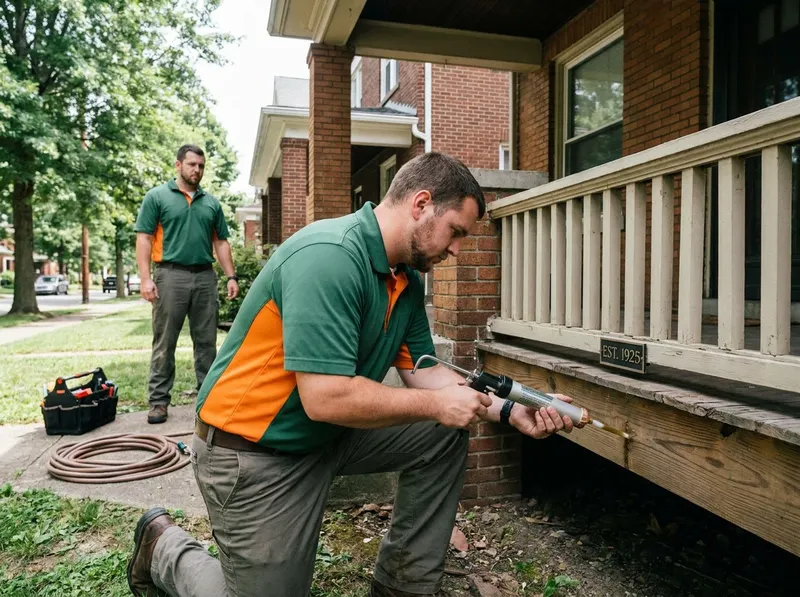
Carpenter ants do not consume wood fibers like subterranean termites; instead, parent and satellite colonies excavate clean nesting galleries inside damp structural timbers. In steep hillside neighborhoods like South Hills and Loudon Heights, roof valley leaks and heavy shade from tree canopies routinely channel rainwater into soffits and fascia boards, creating the exact softwood decay carpenter ants prefer. Similarly, river-adjacent framing along Kanawha City and older stone foundation sill plates in the East End and Edgewood absorb soil moisture, drawing secondary satellite colonies indoors during late spring swarms. Store-bought aerosol sprays cause colony budding, wherein worker ants scatter and establish isolated, defensive sub-colonies deeper within unreachable drywall cavities.
Methodical structural defense pairs root-cause moisture identification with direct localized treatments. Technicians trace frass deposits, fine, sawdust-like shavings containing insect fragments, back to the central nesting void. The mechanical process follows clear steps: 1. Acoustic and thermal checks isolate wall void movement behind baseboards and structural beams. 2. Non-repellent active transfers or low-pressure micro-injections are placed directly into infested structural voids to contaminate the Queen and nursery chambers. 3. A 3-foot vertical barrier is applied along the foundation masonry line to cut off satellite trail connections to outdoor woodpiles or dead tree stumps. 4. Corrective physical exclusion seals crawlspace vents, utility pipe penetrations, and door thresholds.
Decision guidance depends strictly on the insect species and nesting behavior: if structural timber yields coarse sawdust piles with winged ants measuring up to 0.5 inches, select targeted carpenter ant defense; if wood displays mud tubes and layered earthen packing inside hollowed boards, subterranean termite baiting is required instead. Spot treatments address isolated outdoor nests in landscape timbers, whereas total home defense is necessary when nocturnal rustling sounds occur behind bedroom walls or frass falls from crown molding. The operational trade-off centers on non-repellent transfer chemistry: active ingredients require 7 to 14 days to fully circulate through the nest hierarchy, meaning dead ants will continue to emerge on floorboards during the first week before colony activity drops to zero.
Every job gets a firm, written price after a free on-site visit.
Tell us about your carpenter ant structural defense job in Charleston and we'll send a clear, written quote, usually the same day.
 Tavirox Pest Management