Rodent exclusion and eradication fits residential properties where nocturnal scratching in wall cavities, gnaw marks along baseboards, and fecal droppings behind kitchen appliances indicate established nesting.…
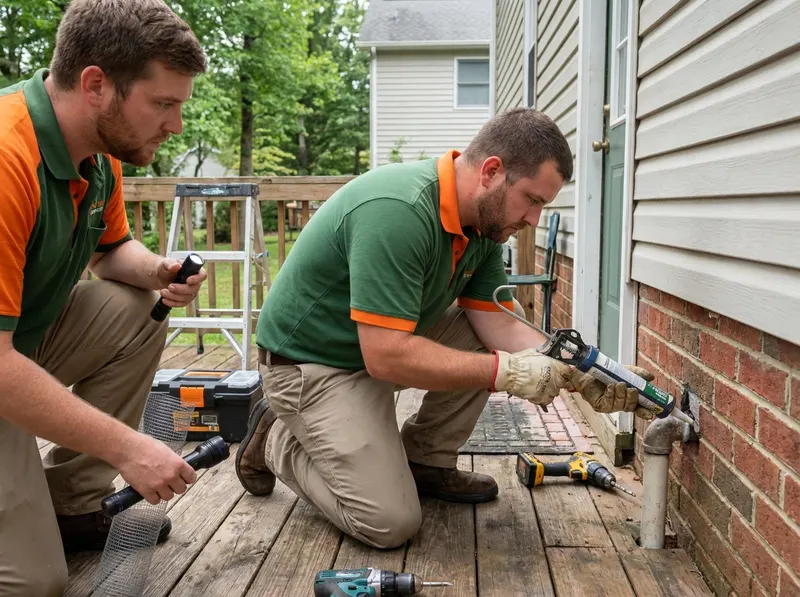
Rodent exclusion and eradication fits residential properties where nocturnal scratching in wall cavities, gnaw marks along baseboards, and fecal droppings behind kitchen appliances indicate established nesting. Off-the-shelf snap traps and chemical poison baits purchased at hardware stores address only transient animals while leaving exterior utility conduits open. Poisons also present secondary toxicity hazards to indoor domestic pets and frequently cause target rodents to perish deep inside drywall voids, producing severe decomposition odors. Mechanical eradication combined with architectural barrier installation resolves the root cause by mechanically locking rodents out of structural framing.
In older riverfront properties throughout the East End, West Side, and North Charleston, fieldstone foundations, weathered brick crawl spaces, and settling sill plates provide entry gaps larger than 0.25 inches. Norway rats exploit moist soil adjacent to the Kanawha River, boring beneath shallow concrete slabs and penetrating unsealed pipe chases. Higher elevation homes situated along steep wooded slopes in South Hills, Fort Hill, Edgewood, and Loudon Heights experience seasonal autumn invasions of white-footed deer mice migrating from oak canopies near Cato Park and Kanawha State Forest. In these elevated terrain zones, low-hanging tree branches give rodents direct access to rooflines, dormer flashings, soffit vents, and attic ridge vents.
Technicians conduct an exhaustive diagnostic check from foundation skirtings up to roof ridge lines. Rather than relying on soft polyurethane expanding foam, which mice breach within 48 hours, structural exclusion utilizes 19-gauge 0.25-inch galvanized steel mesh, copper wire weave, chimney caps, and 26-gauge aluminum flashing. Entry points around gas mains, air conditioning line sets, and crawl space vents are permanently anchored against gnawing. Interior trapping protocols deploy targeted snap mechanisms in tamper-resistant stations along verified travel corridors, eliminating resident rodents without circulating airborne rodenticide dust into occupied living areas.
Every job gets a firm, written price after a free on-site visit.
Tell us about your rodent exclusion and eradication job in Charleston and we'll send a clear, written quote, usually the same day.
 Tavirox Pest Management